

WHEN YOU’RE TOLD TO “WAIT AND SEE,” BUT YOUR GUT SAY SOMETHING ELSE
If you’re here, you’ve probably already asked someone about your toddler’s speech.
Maybe your pediatrician said:
“Let’s give it more time.”
“Boys talk later.”
“He’ll catch up.”
Now you’re stuck in the hardest parenting space of all:
Waiting… while worrying.
For many families in Leander, Cedar Park, and surrounding Central Texas communities, the question isn’t just about speech.
It’s about:
Missing early intervention windows
Wondering if something deeper is going on
Feeling dismissed by professionals
Not wanting to overreact
So let’s break this down clearly:
When is it okay to wait and when is it time to get a speech evaluation?
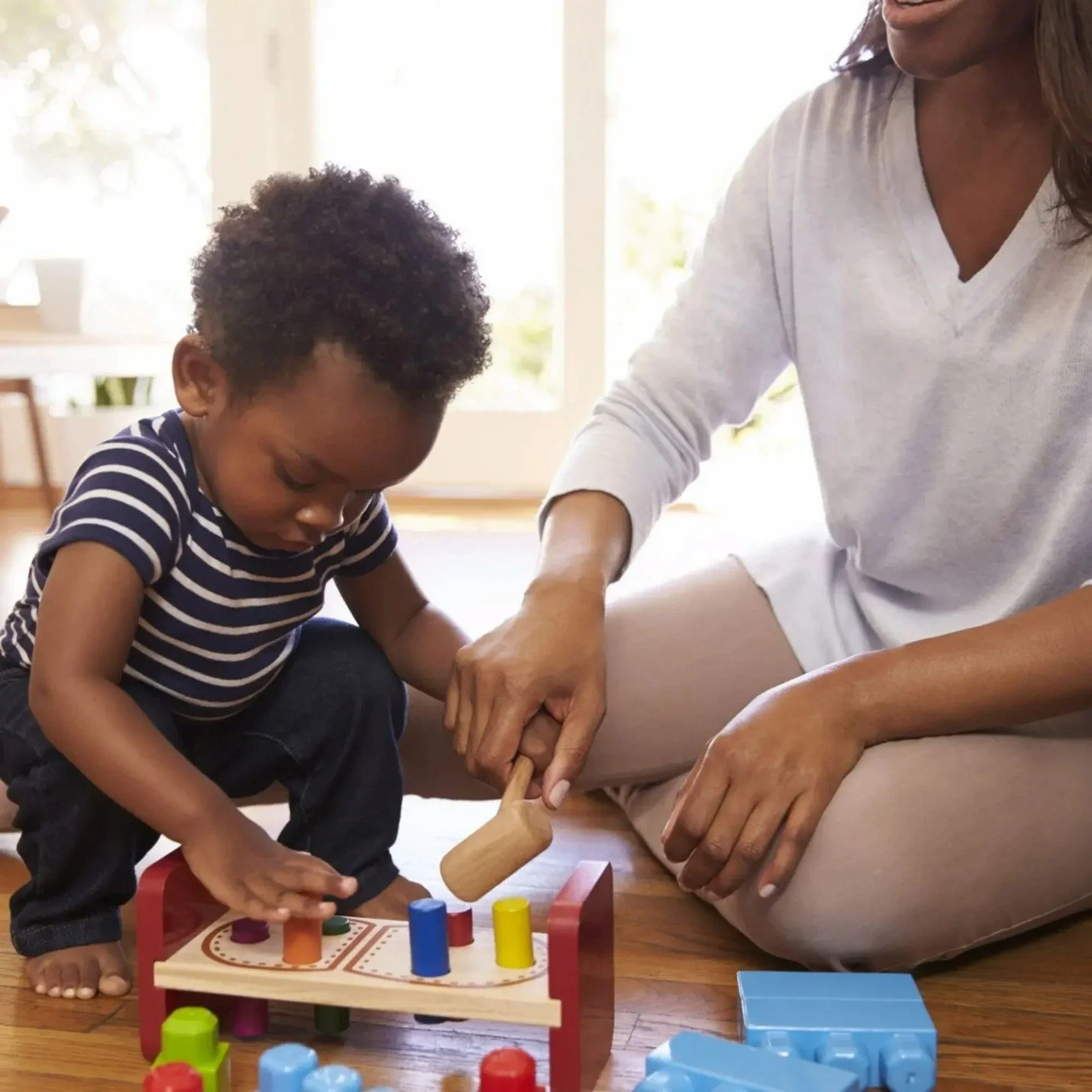
Speech therapist evaluating toddler with speech delay during play-based session in Leander, Texas
First: What “Wait and See” Actually Means
“Wait and see” is not meant to dismiss concerns.
It usually means:
Your child has some skills
Development is emerging
There are no major red flags yet
Here’s the key:
Monitoring should always include a timeline.
If no progress happens within that window, the plan should change.
Passive waiting is different from active monitoring.
Speech & Language Milestones Parents Should Know
Below are simplified developmental expectations SLPs use when deciding whether to evaluate.
By 18 Months
Your toddler should typically:
Use 10–20 words
Point to request or show
Imitate sounds or words
Follow simple directions
🚩 Red flags:
No words
Limited babbling
No pointing or gesturing
By Age 2
Most toddlers:
Use 50+ words
Combine 2 words (“more milk”)
Label familiar objects
Follow 2-step directions
🚩 Red flags:
Fewer than 50 words
No word combinations
Mostly gestures instead of words
Difficulty understanding language
By Age 3
Children typically:
Use 3–4 word sentences
Are understood ~75% of the time
Ask simple questions
Engage in back-and-forth conversation
🚩 Red flags:
Only using single words
Difficult to understand
Limited pretend play
Frustration when communicating
Late Talker or Speech Delay?
This is where families get confused.
A late talker:
Has strong understanding
Uses gestures
Shows steady progress
Engages socially
A speech/language delay may include:
Limited understanding
Few gestures
Minimal imitation
Slow vocabulary growth
Frustration or behavior
Speech evaluations help differentiate between the two.
Why Early Speech Evaluations Matter
Here’s what many parents don’t realize:
Getting an evaluation does not mean committing to therapy.
It simply provides answers.
Benefits include:
Identifying underlying causes
Establishing a baseline
Determining if monitoring is appropriate
Accessing early intervention if needed
Early therapy is often shorter and more effective than waiting.
Common Signs It’s Time to Schedule a Speech Evaluation
Parents in my Leander and Cedar Park practice often reach out when they notice:
Their toddler understands but isn’t talking
Words stopped emerging
Speech is hard to understand
Frequent tantrums due to communication
Reliance on pointing or leading
Limited imitation
Concerns about autism or apraxia
If you’re noticing multiple signs, an evaluation is warranted.
“Will Getting an Evaluation Label My Child?”
This is a common fear and an understandable one.
A speech evaluation does not assign a medical diagnosis.
It assesses:
Understanding of language
Expressive communication
Play skills
Social interaction
Oral-motor abilities
Think of it as developmental information, not labeling
What Happens During a Toddler Speech Evaluation?
Parents often imagine a rigid testing environment.
In reality, toddler evaluations are play-based and child-led.
They may include:
Toy play observation
Language sampling
Parent interview
Oral-motor screening
Social communication assessment
The goal is to understand how your child communicates naturally.
When It Is Okay to Wait
There are situations where monitoring may be appropriate.
For example:
Vocabulary is growing steadily
Child uses gestures effectively
Strong understanding skills
No social communication concerns
Meeting most developmental milestones
In these cases, an SLP may recommend:
Home strategies
Language stimulation techniques
Follow-up monitoring
The Risk of Waiting Too Long
The first three years of life are the most critical window for language development.
Delaying support can impact:
Social skills
Emotional regulation
Academic readiness
Behavior
Parent-child interaction
Early support builds communication foundations before school begins.
Local Support for Families in Leander & Cedar Park
If you’re unsure whether to wait or evaluate, you don’t have to decide alone.
Families in Leander, Cedar Park, and surrounding areas often begin with a speech consultation to:
Discuss concerns
Review milestones
Observe communication
Determine next steps
Sometimes reassurance is all that’s needed.
Other times, early therapy changes the developmental trajectory.
Questions to Ask Yourself Right Now
If you’re on the fence, reflect on these:
Is my child progressing month to month?
Do they try to imitate words?
Do they get frustrated communicating?
Do others understand them?
Is my gut telling me something feels off?
Parents are often the first to notice delays, and they’re often right.
Final Thoughts: You’re Not Overreacting
Seeking answers is not overreacting.
It’s proactive parenting.
Whether the outcome is:
Monitoring
Parent coaching
Speech therapy
You’ll leave with clarity, not uncertainty.
Clarity reduces anxiety.
Not sure whether to wait or schedule an evaluation?
Book a Toddler Speech Consultation to review your child’s communication skills and determine the best next step.
Serving families in Leander, Cedar Park, and surrounding Central Texas communities.
Written by Sonia Chowdhury Lopez, MS, CCC-SLP
Owner and Speech-Language Pathologist at Speechie Auntie
