

Real Communication > Numbers on a Page
If you’re in Leander, Cedar Park, or nearby Texas communities and you’ve ever read a speech-language evaluation report and wondered, ‘Where are the test scores?’, you’re not alone.”
As a pediatric speech-language pathologist, I’m often asked why my evaluation reports don’t list standardized scores, percentiles, or age equivalents. Here’s the short answer: standardized scores don’t tell me what I actually need to know to support your child. If you’d like to understand what a thorough, child-centered speech evaluation should include, I break that down here.
Instead, my evaluations focus on real communication skills in everyday life including how your child expresses needs, interacts with peers, solves problems, and uses language to participate in daily routines. That’s the information that truly drives therapy decisions and helps children grow.
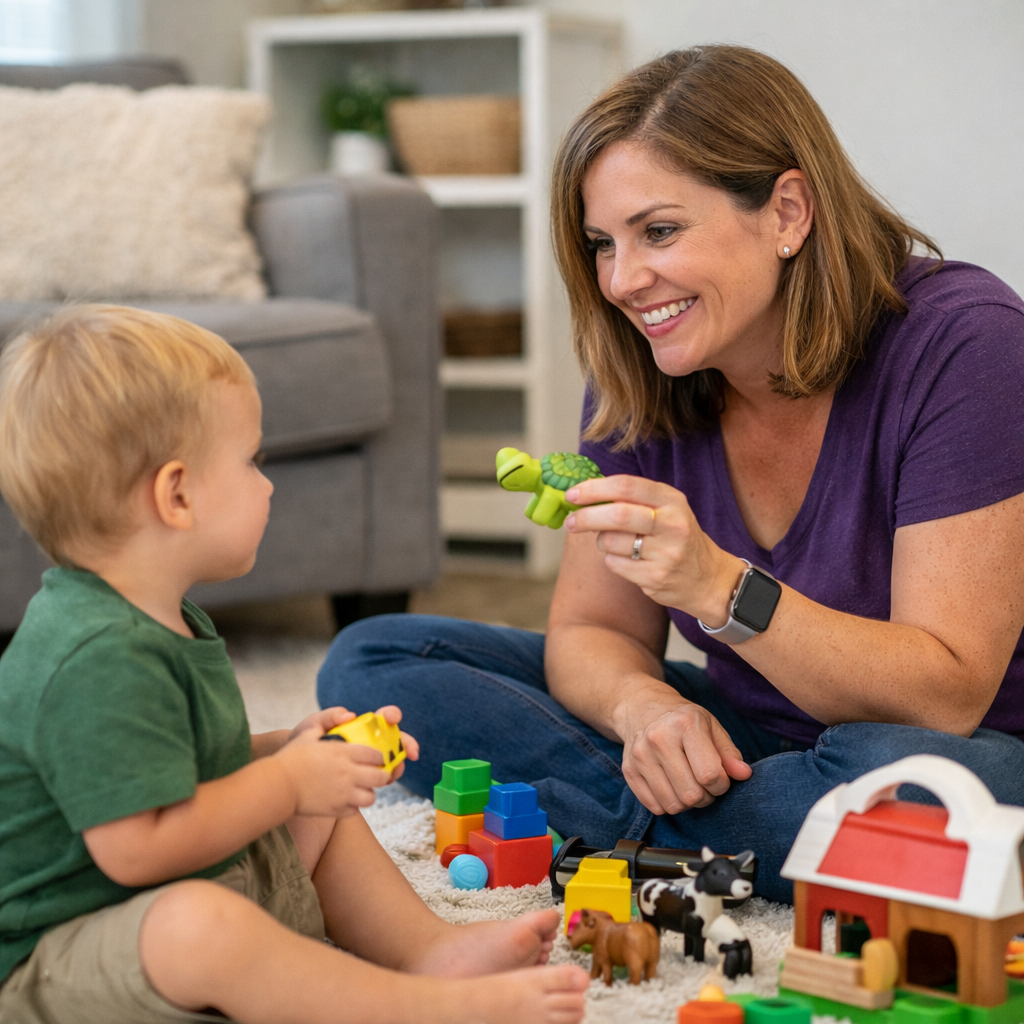
Speech evaluations should focus on real communication skills, not just standardized test scores.
Are Standardized Tests Used in Speech Evaluations?
Yes. Standardized assessments may be administered as part of a comprehensive speech and language evaluation. Here’s what many parents aren’t told: standardized test scores are only a snapshot. They do not reflect how a child communicates in real life, across real environments, with real people. Especially for toddlers and preschoolers, test scores alone are not a reliable indicator of true communication ability.
Why Standardized Test Scores Can Be Misleading for Children
Standardized speech and language tests are conducted in controlled settings and often fail to capture:
Functional communication skills
Spontaneous language during play
Social language and peer interaction
Emotional regulation and attention
Word-finding and language processing
Communication breakdowns in daily routines
A child may score “within normal limits” and still struggle significantly at home or school. Another child may score “below average” but function well with minimal support. That’s why numbers alone don’t drive therapy decisions in my practice, and why evaluations should go beyond numbers whenever possible.
That’s why numbers alone don’t drive therapy decisions in my practice.
Young Children Don’t Perform Consistently on Standardized Tests
For young children, speech and language test scores can vary widely due to:
Fatigue or anxiety
Limited attention span
Unfamiliar testing environments
Neurodivergent learning styles
Cultural and linguistic differences
Yet once a score is written into a report, it often follows a child for years, sometimes being used to deny services or delay support. That’s not something I’m willing to risk.
What My Speech Evaluation Reports Focus On Instead
For families in Leander, Cedar Park, and surrounding Texas communities, this means your evaluation report reflects real-life communication, not just a percentile.
Rather than emphasizing test scores, my speech-language evaluation reports prioritize functional, meaningful data, including:
Expressive language skills
Receptive language comprehension
Pragmatic and social communication
Play-based language use
Strengths and areas of need
How communication impacts daily life
Clear, individualized therapy recommendations
This approach gives parents, teachers, and providers information they can actually use. This also helps families understand what happens after an evaluation and whether speech therapy is the right next step.
Speech Therapy Is About Function, Not Percentiles
Speech therapy isn’t about where a child falls on a bell curve.
It’s about whether a child can:
Express their needs
Participate in learning
Communicate with peers
Reduce frustration
Build confidence
Those outcomes are not captured by standard scores. They are captured through clinical observation, caregiver input, and functional assessment. If you’re noticing early signs that support may be needed, it’s okay to ask questions.
Final Thoughts From Speechie Auntie
Your child is not a number. Your child is a communicator.
My role as a speech-language pathologist is to understand how your child communicates in the real world and to provide a report that supports advocacy, intervention, and growth.
That’s why I focus on function over scores and clarity over cutoffs.
If you’re in Leander, Cedar Park, or North Austin and have questions about a speech and language evaluation, what’s included in my reports, or how to use them to advocate for your child, you can contact me here.
Frequently Asked Questions About Pediatric Speech Evaluations
What is included in a pediatric speech evaluation?
A high-quality pediatric speech evaluation looks at the whole child, not just test scores.
At Speechie Auntie in Leander, TX, evaluations include:
• Observation during play
• Assessment of receptive and expressive language
• Speech sound development
• Social communication skills
• Functional communication in real-life routines
• Parent interview and developmental history
The goal is to understand how your child communicates in everyday life, not just how they perform on a test.
How long does a speech evaluation take?
A comprehensive speech evaluation typically takes 2 to 3 hours.
This allows time for:
• Play-based assessment
• Parent conversation
• Informal language sampling
• Dynamic assessment
• Meaningful observation
Rushed 30-minute screenings often miss important pieces. A thoughtful evaluation takes time because your child deserves careful attention.
Why don’t you use standardized test scores?
Standardized tests can be helpful tool, but they don’t tell the whole story.
Many young children (especially toddlers) do not perform in structured testing environments the same way they communicate at home. Scores alone don’t capture:
• Functional communication
• Play skills
• Engagement
• Real-world interaction
• Strengths and personality
I focus on how your child communicates in natural settings so we can build therapy goals that actually matter for daily life.
How do I know if my child needs a speech evaluation in Leander?
You may want to consider a speech evaluation if your child:
• Is not using words by expected developmental milestones
• Is difficult for others to understand
• Gets frustrated trying to communicate
• Struggles to follow directions
• Has limited social interaction or play skills
• You simply have a gut feeling something isn’t clicking
If you're in Leander, Cedar Park, or North Austin, and you’re unsure, it’s always okay to ask questions. Early support can make a meaningful difference.
Ready to learn more about your child’s communication skills in Leander or Cedar Park?
Call today to schedule a pediatric speech evaluation and get real answers that matter.
Written by Sonia Chowdhury Lopez, MS, CCC-SLP
Owner and Speech-Language Pathologist at Speechie Auntie
