

My Toddler Understands Everything but Won't Talk: Understanding Expressive Language Delay
If you've found yourself searching "My toddler understands everything but won't talk," you're certainly not alone.
As a pediatric speech-language pathologist, one of the most common things I hear from parents is:
"She understands everything I say. She just doesn't talk."
Or...
"He follows directions perfectly, but he barely says any words."
These observations can be confusing because your child clearly seems to understand language. They point to what they want, follow routines, laugh at jokes, bring you the correct shoes when you ask, and seem to know exactly what's happening around them.
So why aren't they talking?
The answer isn't always simple, but understanding the difference between understanding language and using language is an important first step.
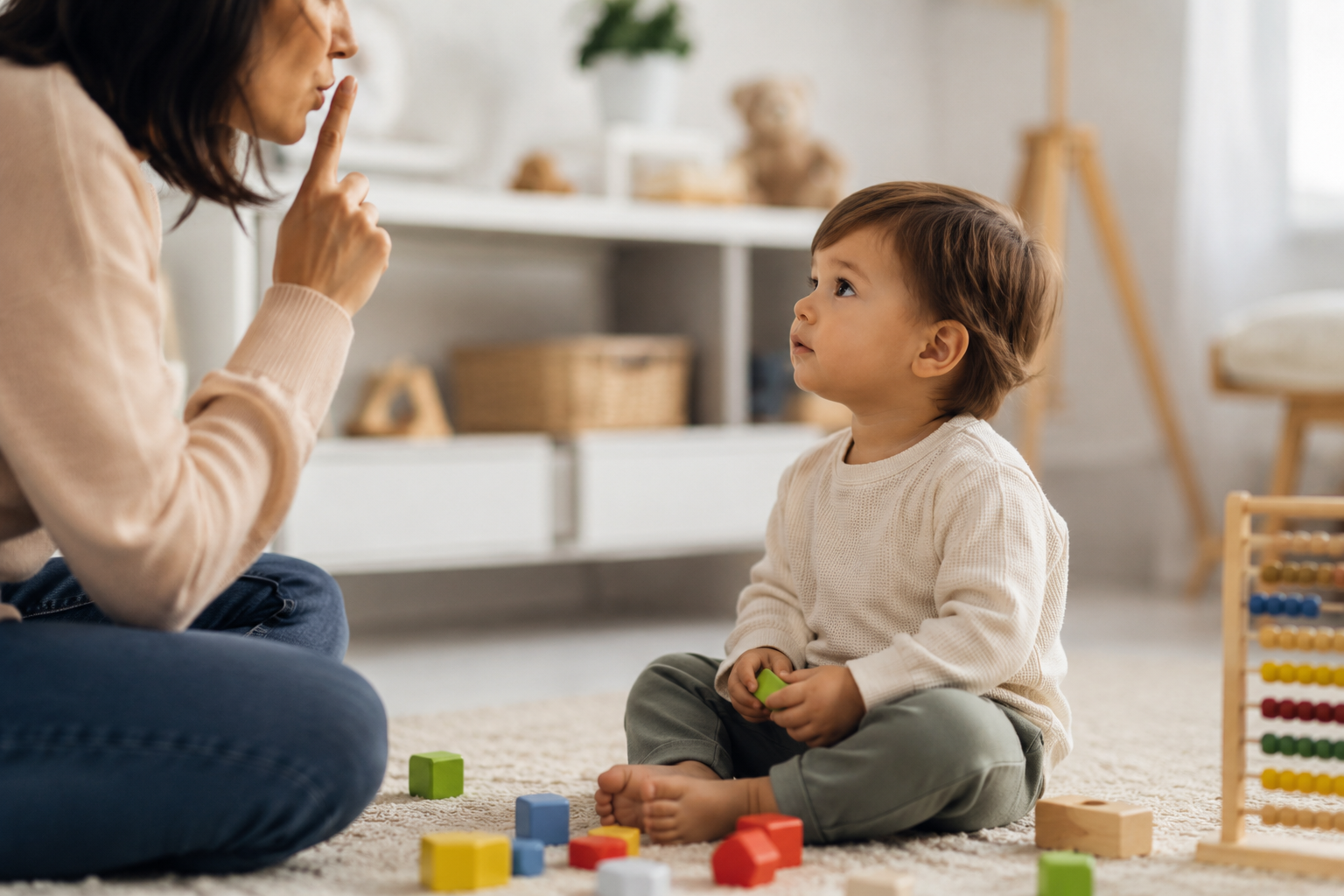
Some toddlers understand everything around them but still have difficulty using words. A comprehensive speech-language evaluation helps identify why communication is challenging and guides the next steps for supporting language development.
Understanding Language and Talking Are Different Skills
Many parents assume that if a child understands language, speaking should naturally follow.
Sometimes it does.
Sometimes it doesn't.
Communication actually involves many different skills that develop together but don't always develop at the same pace.
Children must learn to:
understand words
understand sentences
pay attention to others
imitate sounds
coordinate the muscles used for speech
learn vocabulary
organize words into sentences
use language socially
A child may be doing very well in one area while needing support in another.
For example, a toddler might:
follow two-step directions
recognize hundreds of words
point to pictures in books
understand daily routines
...while still saying only a handful of words.
That pattern is something speech-language pathologists see quite often.
What Is an Expressive Language Delay?
When a child understands more language than they can express, they may have what's called an expressive language delay.
Expressive language refers to everything we use to communicate with others, including:
spoken words
gestures
signs
AAC (augmentative and alternative communication)
combining words into sentences
asking questions
commenting
telling stories
sharing ideas
Children with expressive language delays often know much more than they're able to communicate.
Parents frequently tell me:
"I know he knows what I mean."
They're often right.
Understanding language is called receptive language.
Using language is called expressive language.
Although these skills influence one another, they are not exactly the same.
Signs Your Toddler May Have an Expressive Language Delay
Every child develops at their own pace.
However, some signs suggest that a speech-language evaluation may be beneficial.
Your toddler may benefit from an evaluation if they:
understand directions but rarely use words
rely heavily on pointing or leading adults by the hand
become frustrated because they cannot express themselves
have difficulty combining words into short phrases
use fewer words than expected for their age
imitate very little
rarely initiate communication
communicate primarily by crying or gestures
have speech that is difficult for familiar adults to understand
Keep in mind that speech and language development exists on a continuum.
An evaluation isn't about placing a label on your child.
It's about understanding their strengths, identifying areas of need, and determining whether additional support would be helpful.
"Should I Just Wait?"
This is probably the question I hear most often.
Some children who are late to begin talking do eventually catch up without intervention.
Others do not.
The challenge is that it can be difficult to know which child will catch up and which child needs support based on observation alone.
Waiting several months, or even a year, may mean missing valuable opportunities during a period of rapid brain development.
Research consistently shows that early identification and intervention can improve communication outcomes for many children with speech and language delays.
Seeking an evaluation doesn't automatically mean your child will need ongoing therapy.
Sometimes parents leave an evaluation with reassurance and strategies to use at home.
Other times, therapy is recommended to help build communication skills during these important early years.
Either outcome provides valuable information that helps families make informed decisions.
There Are Many Reasons a Child May Not Be Talking
One of the biggest misconceptions is that every child who isn't talking has the same underlying reason.
In reality, several different factors can contribute to delayed expressive language.
Some children are late talkers.
Some have expressive language delays.
Others may have receptive language difficulties in addition to expressive challenges.
For some children, speech production itself is difficult because coordinating the movements required for talking is challenging. Conditions such as childhood apraxia of speech are examples of motor speech disorders that require specialized assessment.
Some children may also have differences in social communication, play, or other developmental areas that warrant a more comprehensive evaluation.
Hearing differences, medical history, and overall development are also important pieces of the puzzle.
This is exactly why guessing or relying solely on milestone checklists isn't enough.
A comprehensive evaluation looks at the whole child rather than focusing only on the number of words they say.
What Happens During a Speech-Language Evaluation?
A comprehensive speech-language evaluation helps determine why a child may not be talking as expected.
During an evaluation, a pediatric speech-language pathologist may assess:
how well your child understands language
how your child communicates wants, needs, and ideas
speech sound development
imitation skills
gestures and nonverbal communication
play skills
social interaction
attention and engagement
oral-motor and motor-speech skills
hearing and developmental history
Standardized testing may be included, but test scores are only one part of the process.
Young children do not always demonstrate their full abilities during structured testing. For that reason, observation, play-based interaction, Caregiver input, language samples, and developmental history are also essential.
The goal is not simply to count words. The goal is to understand how your child communicates across everyday routines, play, and social interactions.
When Should I Contact a Pediatric Speech-Language Pathologist?
You do not need to wait until your child is significantly behind to ask questions.
Consider scheduling a speech-language evaluation if your toddler:
is using fewer words than expected for their age
understands language but is not using many words
rarely combines words
becomes frustrated when trying to communicate
relies mostly on pointing, crying, or pulling adults toward desired items
has difficulty imitating sounds or words
seems difficult to understand
has lost words or communication skills they previously used
has a history of frequent ear infections or hearing concerns
shows differences in play, social interaction, or engagement
A speech-language evaluation does not automatically mean your child will need therapy.
Some families receive reassurance, developmental guidance, and strategies to support communication at home. Others may receive recommendations for speech therapy or additional developmental assessment.
Either way, having clear information can help you feel more confident about the next step.
Supporting Your Toddler’s Communication at Home
While waiting for an evaluation, there are simple ways to support communication during everyday routines.
Try commenting more and questioning less. Instead of repeatedly asking, “What is that?” you might say, “Big truck,” “Truck is going,” or “I see the truck.”
You can also:
follow your child’s interests
use short, clear phrases
model words without requiring repetition
pause and give your child time to respond
offer choices
imitate your child’s sounds, actions, and gestures
expand on the words your child already uses
read simple, repetitive books
create opportunities for your child to request help, more, or a desired item
The goal is not to pressure your child to talk. The goal is to make communication easier, meaningful, and enjoyable.
My Toddler Understands Everything but Won’t Talk: What Is the Next Step?
If your toddler appears to understand everything but is not talking much, your observations matter.
You know your child best.
Understanding language is an important strength, but it does not always mean expressive language will develop without support. A comprehensive speech-language evaluation can help identify your child’s communication strengths, clarify areas of need, and determine whether intervention is recommended.
Speechie Auntie provides comprehensive pediatric speech-language evaluations and in-home speech therapy for toddlers and preschoolers in Leander, Cedar Park, Liberty Hill, North Austin, and surrounding Central Texas communities.
If you are concerned about your toddler’s speech, language, play, or overall communication development, you do not have to continue wondering or simply wait and see.
You can learn more about evaluations and services at www.speechieauntie.com.
Ready to Learn More?
If your toddler understands language but isn't talking as much as expected, you don't have to navigate those questions alone.
At Speechie Auntie, I provide comprehensive, play-based speech-language evaluations and in-home speech therapy for toddlers and preschoolers throughout Leander, Cedar Park, Liberty Hill, North Austin, and surrounding Central Texas communities.
Every evaluation is individualized and designed to help families better understand their child's communication strengths, areas of need, and the most appropriate next steps.
If you're ready to learn more or schedule an evaluation, simply click the button below to get in touch. I'd be honored to help your family on this journey.
Written by Sonia Chowdhury Lopez, M.S., CCC-SLP
Owner and Speech-Language Pathologist at Speechie Auntie
