

Why Play Is the Foundation of Communication Development
When parents become concerned about their child's speech and language development, one of the most common questions I hear is:
"Why does my speech therapist spend so much time playing?"
It is a fair question. To many adults, play may look like fun or entertainment. However, for young children, play is much more than that. Play is how children learn about the world, connect with other people, solve problems, and develop communication skills.
In fact, communication and play develop side by side. Before children can engage in conversations, answer questions, tell stories, or express their thoughts with words, they first learn foundational communication skills through play.
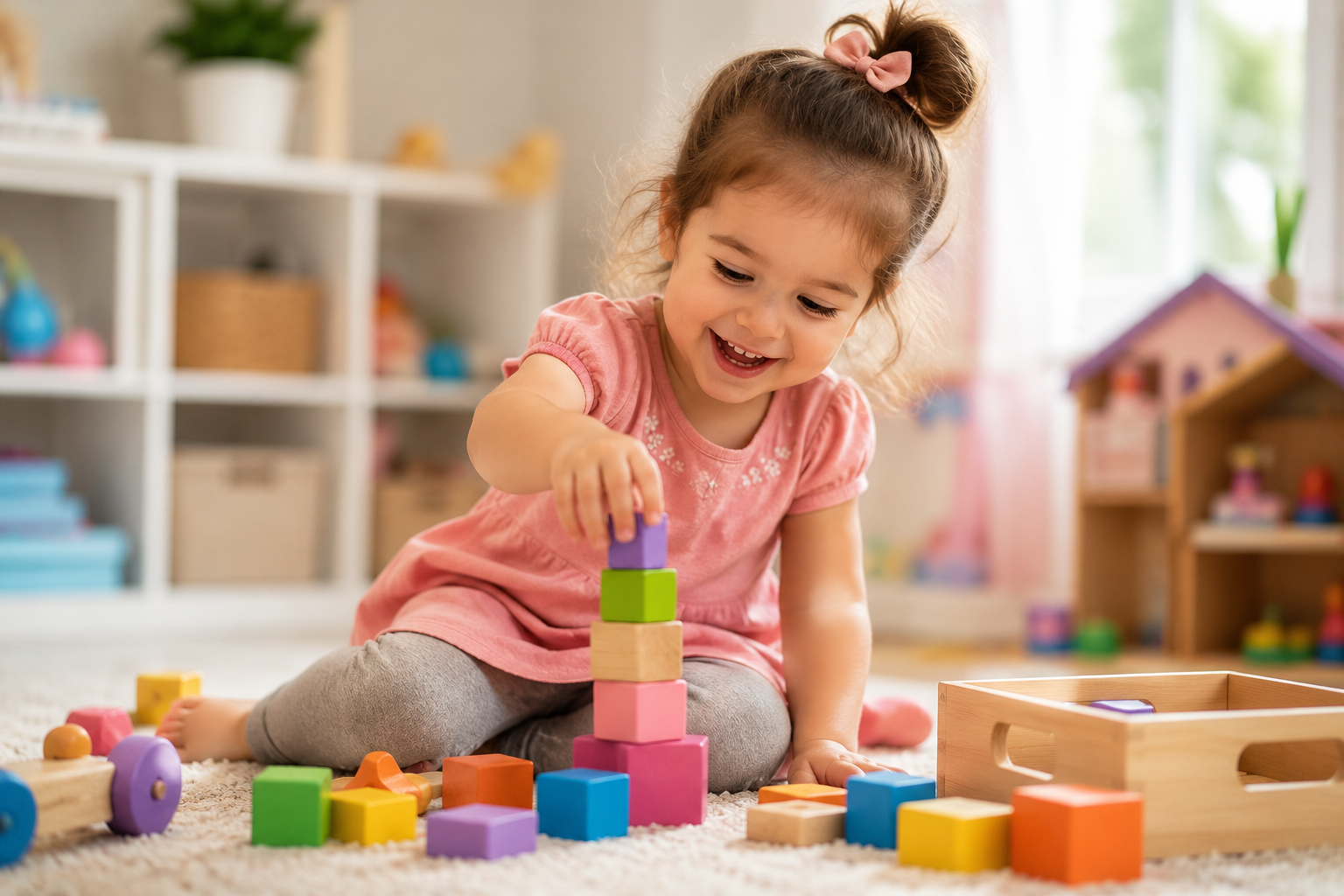
Play helps children build language, social communication, problem-solving, and connection skills.
Communication Starts Long Before Words
Many people think communication begins when a child says their first word.
In reality, communication begins much earlier.
Long before children say "mama" or "more," they learn important social communication skills such as:
Making eye contact
Looking at people
Smiling
Taking turns
Pointing
Showing objects
Sharing attention with another person
Imitating actions
These early skills are often developed during play experiences with parents, siblings, caregivers, and peers.
When a baby drops a toy and looks at a parent to see what happens next, communication is happening.
When a toddler brings a favorite toy to show a caregiver, communication is happening.
When a child laughs during a silly game and waits for it to happen again, communication is happening.
Words eventually grow from these early interactions.
Play Builds Joint Attention
One of the most important skills for language development is joint attention.
Joint attention occurs when two people focus on the same object, activity, or experience together.
For example:
A child points to an airplane and looks back at their parent.
A parent and child read a book together.
Two people build a tower and celebrate when it falls down.
These moments may seem simple, but they create opportunities for children to learn new words, understand language, and engage socially.
Research consistently shows that strong joint attention skills are closely related to language development.
Play naturally creates opportunities for joint attention throughout the day.
Play Teaches Turn-Taking and Social Interaction
Conversations involve taking turns.
Before children can take turns talking, they learn to take turns playing.
Simple games such as rolling a ball, building blocks, playing peek-a-boo, or taking turns on a swing teach children that interactions involve a back-and-forth exchange.
Through play, children learn:
To wait
To watch others
To respond to another person's actions
To anticipate what comes next
To stay engaged with a communication partner
These skills become the foundation for future conversations.
Pretend Play Supports Language Growth
As children grow, their play becomes more complex.
A toddler may pretend to feed a baby doll.
A preschooler may create an entire restaurant, veterinary clinic, or superhero adventure.
Pretend play supports communication development by helping children learn:
Vocabulary
Children encounter new words during play.
They learn action words, descriptive words, location words, and category concepts naturally while engaging in meaningful activities.
Sequencing
Play helps children understand how events happen in order.
For example:
First, we make the pizza.
Next, we bake it.
Then, we eat it.
These sequencing skills later support storytelling, reading comprehension, and classroom learning.
Problem-Solving
Children encounter challenges during play every day.
The tower falls down.
The puzzle piece does not fit.
The toy gets stuck.
Working through these situations helps children develop flexible thinking and language for problem-solving.
Storytelling
Pretend play is often a child's first form of storytelling.
Children create characters, develop problems, and act out solutions.
These same skills later support personal narratives, story retells, and academic language.
Why Play-Based Speech Therapy Works
At Speechie Auntie, I use a play-based approach because children learn best when they are actively engaged and emotionally connected to what they are doing.
When children are interested, motivated, and having fun, they are more likely to:
Communicate spontaneously
Stay engaged longer
Practice new skills
Generalize skills to everyday life
Play-based therapy allows speech and language goals to be targeted in ways that feel natural and meaningful to the child.
What may look like "just playing" often involves carefully planned opportunities to support:
Receptive language
Expressive language
Social communication
Play skills
Vocabulary development
Following directions
Turn-taking
Problem-solving
Early literacy skills
Play is not separate from therapy.
For young children, play is often the most effective way to provide therapy.
How Parents Can Support Communication Through Play at Home
You do not need expensive toys or complicated activities to support communication development.
Some of the best opportunities happen during everyday routines.
Try these simple strategies:
Follow Your Child's Lead
Join your child's interests rather than directing every activity.
When children are interested, communication is more likely to occur.
Get Face-to-Face
Sit on the floor and play alongside your child.
Being at their level helps create opportunities for connection and interaction.
Comment More Than You Question
Instead of asking constant questions, try making comments.
For example:
"That car is fast!"
"You built a tall tower."
"The dinosaur is hungry."
Comments reduce pressure and provide rich language models.
Pause and Wait
Create opportunities for your child to communicate.
Pause during a favorite song, game, or routine and wait expectantly.
Many children will attempt to communicate when given enough time and space.
Final Thoughts
Communication does not begin with words.
It begins with connection.
Through play, children learn how to engage with others, share experiences, solve problems, take turns, and communicate their ideas.
Whether your child is a late talker, autistic, a gestalt language processor, or simply learning to communicate, play provides the foundation upon which language develops.
The next time you see a speech therapist sitting on the floor playing with a child, remember:
They are not taking a break from therapy.
They are helping build the skills that make communication possible.
Speechie Auntie provides neurodiversity-affirming, play-based speech therapy and caregiver coaching for children in Leander, Cedar Park, and surrounding communities.
If you have concerns about your child's speech, language, play, or communication development, contact Speechie Auntie to learn more about in-home pediatric speech therapy services.
Written by Sonia Chowdhury Lopez, M.S., CCC-SLP
Owner and Speech-Language Pathologist at Speechie Auntie
