

Play-Based Speech Therapy: What It Is and Why It Works
If your child recently started speech therapy or you’ve been recommended an evaluation, you may have heard the term play-based speech therapy.
Families in Leander, Cedar Park, and surrounding Central Texas communities often ask what play-based speech therapy actually looks like and why it’s so commonly recommended for toddlers and preschoolers.
Many parents are surprised when therapy looks more like playing with toys than sitting at a table doing drills.
Here’s the truth:
Play is the foundation of how young children learn language.
Play-based speech therapy is one of the most research-supported, developmentally appropriate ways to build communication skills in toddlers and preschoolers.
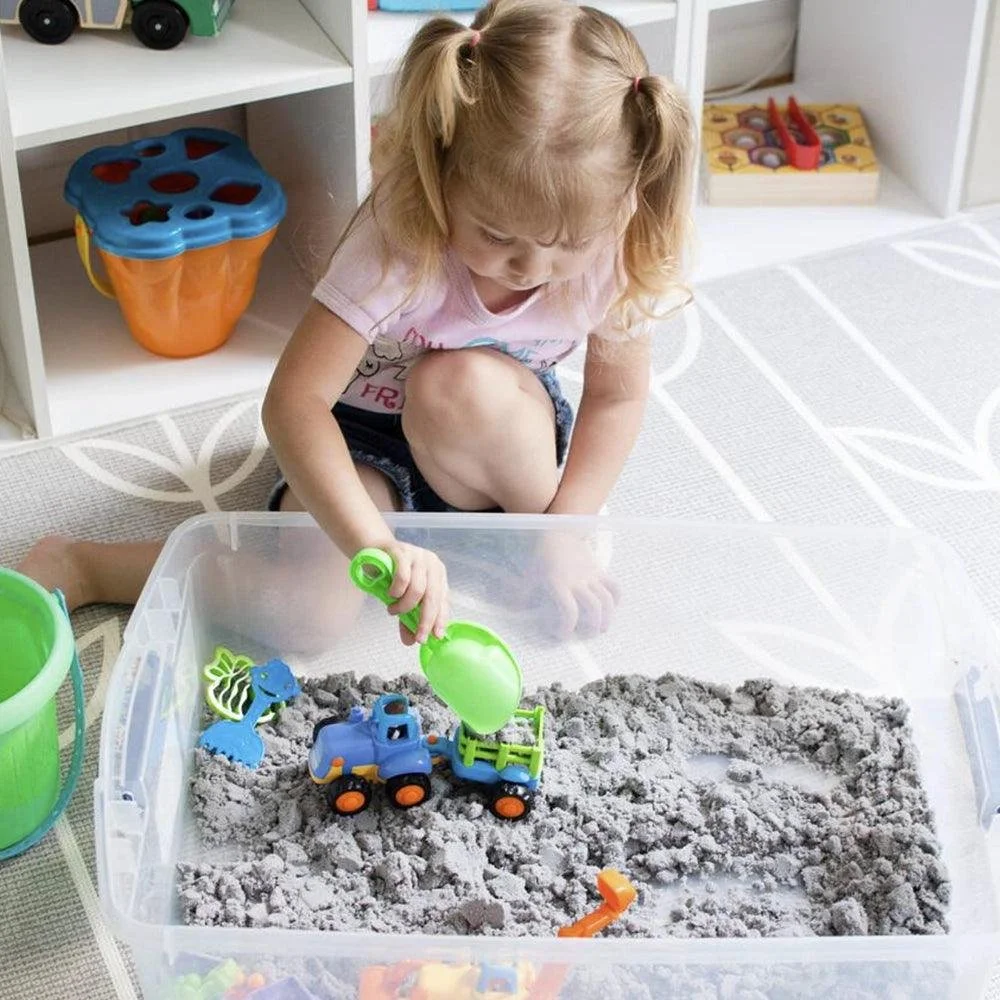
“Play-Based Speech Therapy”
Helping Little Voices Grow Through Play
What Is Play-Based Speech Therapy?
Play-based speech therapy is an intervention approach where a Speech-Language Pathologist (SLP) targets speech and language goals through toys, games, and child-led activities.
Instead of flashcards or worksheets, therapy may include:
Pretend play
Blocks
Bubbles
Toy animals
Cars
Play kitchens
Board games
The therapist strategically creates opportunities for the child to practice communication skills while they are engaged and having fun.
Why this works:
Increases attention and motivation
Feels natural, not forced
Encourages spontaneous language
Builds real-life communication skills
Improves carryover at home and school
THE SIX STagE OF PLAY DEVELOPMENT
Understanding how play develops helps SLPs know what communication skills to target.
1. Unoccupied Play (Birth – 3 Months)
Your baby explores body movements such as kicking, waving arms, grasping.
2. Solitary Play (Birth – 2 Years)
Your child plays alone and is not yet interested in interacting with others.
3. Spectator / Onlooker Play (Around 2 Years)
Your child watches other children play but doesn’t join yet.
4. Parallel Play (2+ Years)
Your child plays near other children without interacting directly.
5. Associative Play (3–4 Years)
Children begin interacting but may not coordinate play themes or roles.
6. Cooperative Play (4+ Years)
Children play together toward a shared goal (pretend games, building, role play).
Types of Play Targeted in Speech Therapy
SLPs use different play styles to target specific communication skills.
Exploratory Play
Using senses to explore toys (shaking, mouthing, banging).
Functional Play
Using toys correctly (rolling cars, feeding dolls).
Construction Play
Building with blocks, Legos, Magnatiles.
Game Play With Rules
Board games that teach turn-taking, problem solving, social language.
Energetic Play
Movement-based play (ball play, obstacle courses).
Dramatic / Pretend Play
Acting out real-life routines (cooking, doctor visits, school).
Pretend play is especially powerful for language because it targets:
Sequencing
Vocabulary
Social scripts
Storytelling
Perspective taking
How SLPs Implement Play in Speech Therapy Sessions
Play-based therapy is intentional, not just “free play.”
A trained Speech-Language Pathologist will:
Follow the child’s lead
Joining what the child is already interested in.
Get on the child’s level
Face-to-face interaction increases engagement and language modeling.
Use animated voice & affect
Keeps attention and supports comprehension.
Reduce demands
Avoids pressure so communication feels natural.
Avoid drill phrases like:
“Say ____.”
Instead, they model language organically.
Model speech & language targets
Examples:
Expanding utterances
Labeling
Commenting
Requesting
Asking questions
Offer structured choices
Providing 2–3 toy options encourages decision-making and communication.
Use visual timers
Helps toddlers transition between play activities.
Toys Commonly Used in Play-Based Speech Therapy
To create a language-rich therapy environment, SLPs often use:
Bubbles
Blocks
Wind-up toys
Balloon pumps
Plastic food
Toy cars & trains
Farm sets
Dollhouses
Vet or doctor kits
Memory games
Pretend kitchens
These toys allow therapists to target:
Vocabulary
Verbs
Social routines
Turn-taking
Following directions
Storytelling
Why Choose a Play-Based Speech Therapist?
Play-based speech therapy supports communication in the way young children learn best, through relationships and real experiences.
Benefits include:
✔ Higher engagement
✔ More spontaneous language
✔ Functional skill development
✔ Stronger therapist-child bond
✔ Improved social communication
✔ Better carryover at home
Play helps children connect words to real-life meaning. which strengthens learning and retention.
When therapy feels fun and safe, children are more willing to take communication risks.
Final Thoughts
Play is not a break from learning.
Play is the learning.
Through play-based speech therapy, children build the foundational skills needed for:
Speech development
Language growth
Social interaction
Emotional connection
If you’re considering speech therapy for your toddler or preschooler, seeking a clinician trained in play-based intervention can make therapy both effective and joyful.
Let’s play and learn together.
Wondering if play-based speech therapy is right for your child?
If your toddler or preschooler is having difficulty talking, understanding language, or engaging in play, early support can make a big difference.
I offer in-home and virtual speech therapy services using play-based, relationship-centered approaches designed to help children communicate confidently.
At Speechie Auntie, play-based speech therapy services are provided in-home for toddlers and preschoolers across Leander, Cedar Park, and surrounding Central Texas communities. Therapy sessions are designed to feel natural and engaging within your child’s everyday environment.
Written by Sonia Chowdhury Lopez, M.S., CCC-SLP
Owner and Speech-Language Pathologist at Speechie Auntie
