

THE IMPACT OF PROLONGED PACIFIER AND BOTTLE USE
We all want what’s best for our child’s health and well-being. However, some seemingly harmless habits, like pacifier and bottle use, can have significant long-term consequences when continued beyond a certain age, especially when it comes to speech development.
If you’re wondering whether your child’s speech is on track, read my guide on when to seek help for a toddler speech delay. Families in Leander, Cedar Park, and the greater North Austin area often ask how pacifier and bottle use may impact their toddler’s speech skills. Let’s examine the potential risks of letting your child use pacifiers and bottles for an extended period of time.
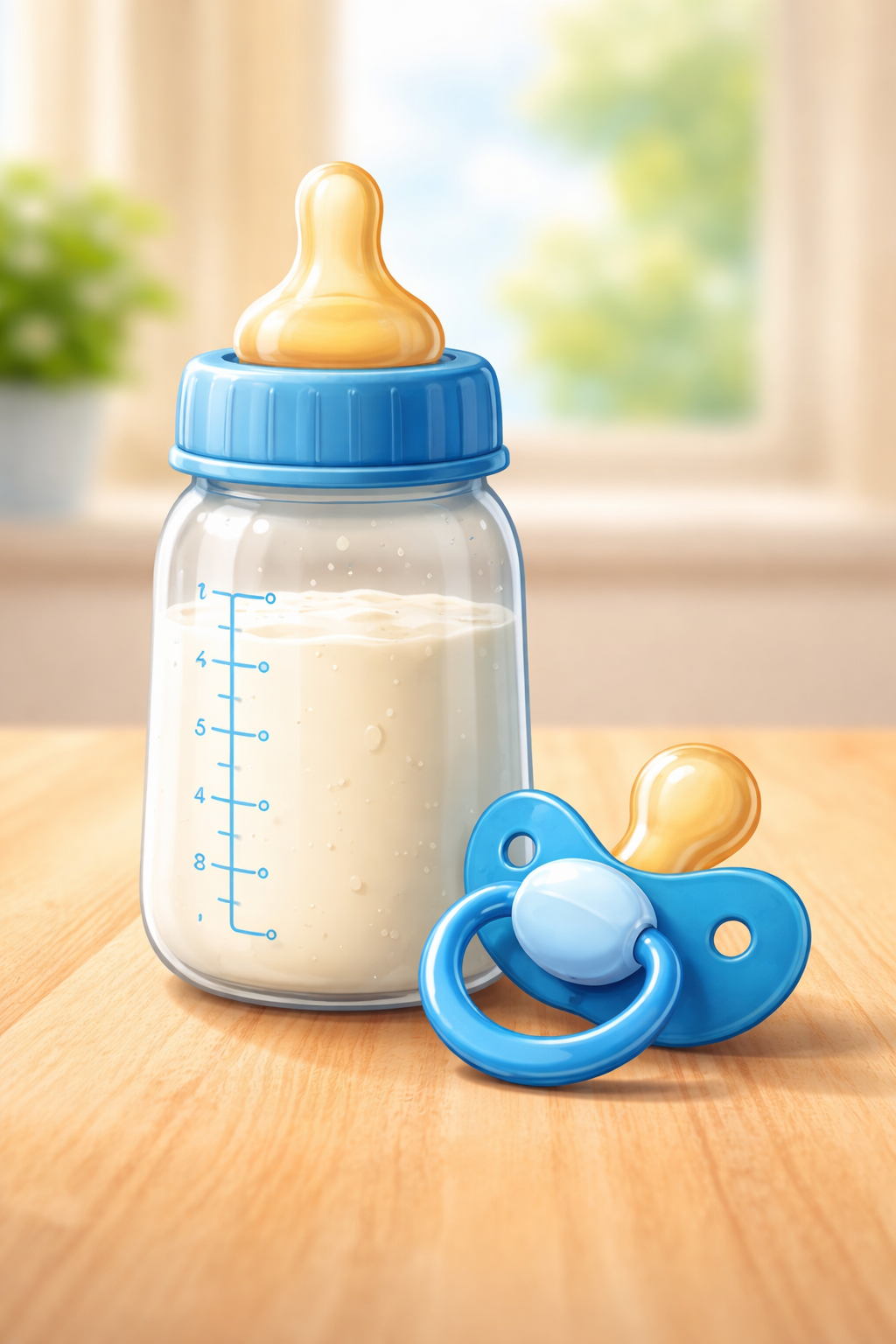
How Prolonged Pacifier and Bottle Use Impacts Toddler Speech Development
Teeth Impacted: Prolonged use of a pacifier or bottle causes an open jaw as the teeth have to shape themselves around the space that these items occupy. An open jaw makes it harder to produce certain speech sounds. Also, when your child has a pacifier in their mouth they cannot babble, which is an important milestone.
Palate Impacted: Prolonged use of a pacifier or bottle causes temporary or even permanent palate malformation. This can result in a lack of sensation on the roof the mouth. A lack of feeling on the roof of the mouth can lead to speech difficulties as there are several speech sounds that are produced on the palate.
Ears Impacted: Prolonged use of a pacifier or bottle cause an increased chance of ear infections. Recurring ear infections at a young age impacts your child’s ability to hear speech sounds clearly or tell the difference between speech sounds. Frequent ear infections could ultimately lead to speech delays.
In my work with toddlers across Leander and Cedar Park, prolonged pacifier use is one of the most common contributing factors I see when evaluating speech delays.
BYE-BYE BINKI
A child should be weaned off the pacifier at six to twelve months of age. Provide your child with a replacement item such as a comforting toy or blanket. You can gradually give your child smaller and smaller sizes of pacifiers until it’s no longer satisfying for them. Allow your child to only use the pacifier when they are sitting down and not when walking around. This makes the use of a pacifier completely undesirable.
BYE-BYE BOTTLE
A child should be weaned off the bottle at nine to twelve months of age. Do not allow your child to sleep with a bottle in their mouth. Also, do not rely on sippy cups as a substitution for the bottle. The nipple on a sippy cup is just as harming to your child as a bottle. A safe alternative is an open cup with a straw. You can cut the straw down a quarter of an inch periodically. This provides your child with less and less of an object to suck on. Eventually, there will be no more straw left and your child will be drinking from an open cup. If you’re struggling to wean the pacifier or bottle without meltdowns, you’re not alone. I walk families through step-by-step routines and transitions inside my parent coaching program.
Many families I work with in Leander and surrounding areas find that having a structured weaning plan makes the transition much smoother for both child and caregiver.
STAY STRONG!
I want to set your mind at rest by letting you know you did nothing wrong by having your child use a pacifier or bottle beyond a certain age. Bottles and pacifiers have their uses in early life. It’s when your child uses these items for too long that problems will start to arise. Your child will really dislike giving up the pacifier or bottle. Keep reminding yourself the longer your child continues to use these items, the more it will negatively impact the development of their mouth, their overall health, and their speech progress. Nip these bad habits in the bud immediately. Your child will greatly benefit! I encourage you to seek a well-trained Speech-Language Pathologist who can provide guidance and strategies to assist with pacifier and bottle weaning.
Pacifier & Bottle Use — Frequently Asked Questions
Below are answers to the most common questions parents ask about pacifier and bottle use and speech development.
Do pacifiers cause speech delay?
Prolonged pacifier use can contribute to speech delays when used beyond infancy. When a pacifier is frequently in a child’s mouth, it reduces opportunities for babbling, sound play, and early word practice. Extended use may also impact oral muscle development and tooth alignment, both of which play a role in speech sound production.
When should my child stop using a bottle?
Most pediatric and speech-language guidelines recommend weaning from the bottle between 9–12 months of age. Transitioning to an open cup or straw cup supports oral motor development, tongue movement, and jaw strength — all important foundations for speech and feeding skills.
Can prolonged pacifier use affect oral development?
Yes. Long-term pacifier use can impact palate shape, tooth alignment, and oral sensation. These structural changes may affect how children produce certain speech sounds and how they chew and swallow foods. Early weaning helps support healthy oral and speech development.
Families in Leander, Cedar Park, and North Austin can contact Speechie Auntie here to get started with individualized support.Need more support? Start here:
Speechie Auntie provides in-home and parent-coaching speech therapy services for toddlers and preschoolers in Leander, Cedar Park, and surrounding North Austin communities.
Written by Sonia Chowdhury Lopez, MS, CCC-SLP
Owner and Speech-Language Pathologist at Speechie Auntie
