

Behavior Is Communication: What Your Child Is Really Trying to Tell You
Your toddler hits another child at daycare. They bite when they're frustrated, throw themselves onto the floor because you handed them the blue cup instead of the green one, or scream when it's time to leave the playground.
If your child has a speech delay or autism, these moments can feel especially confusing. You may find yourself wondering:
"Why are they doing this?"
"Are they just being defiant?"
"How do I make it stop?"
The truth is that behavior is rarely "bad." More often, it's communication.
Every behavior, whether it's hitting, crying, running away, throwing toys, or refusing to participate, is your child's way of communicating something they don't yet have the language or communication skills to express with words.
When we stop asking, "How do I stop this behavior?" and start asking, "What is my child trying to communicate?" we begin to understand the real problem. Once we understand the reason behind the behavior, we can teach the communication skills that make those behaviors less necessary over time. Understanding the “why” behind behavior does not just help your child, it also helps you respond with more confidence, patience, and intention instead of frustration.
In this article, we'll explore why behavior is communication, what your child may be trying to tell you, and how responding to the message behind the behavior can support both communication development and a calmer, more connected relationship.
As a pediatric speech-language pathologist serving Leander, Cedar Park, Liberty Hill, , Pflugerville, and surrounding communities, one of the most common questions I hear is, "Why is my child behaving this way?"
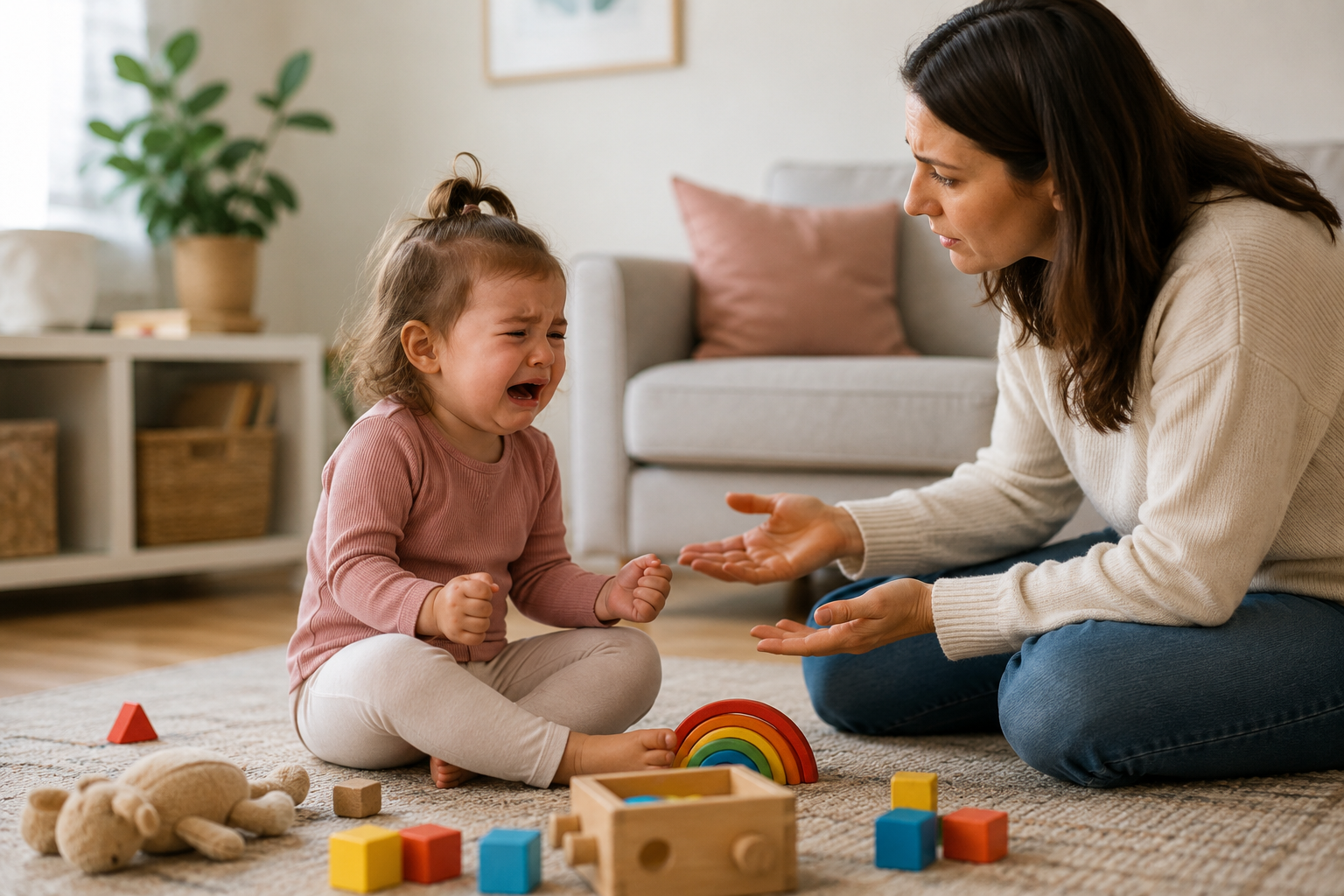
Every behavior tells a story. Looking beyond the behavior helps us understand what a child is trying to communicate.
Before we talk about what your child's behavior may mean, let's first look at why so many parents feel stuck trying to respond to it.
Why Parents Often Feel Stuck
“Why does my toddler hit me when I tell him no?” “Why does my child throw toys instead of asking for help?” “Why are transitions so hard?” These are some of the most common questions I hear as a pediatric speech-language pathologist.
When challenging behaviors happen over and over again, it is easy to assume a child is being defiant or testing limits. While children certainly need boundaries, I encourage families to first ask a different question: “What is my child trying to communicate?”
That simple shift changes everything. Behavior is communication. Before children have the words to explain their thoughts, feelings, and needs, they often use their bodies to communicate. Our job as adults is to understand the message and then teach a more effective way to express it.
Communication Is More Than Talking
Communication begins long before a child speaks. Babies communicate through eye contact, smiles, reaching, crying, pointing, gestures, and pulling an adult's hand. As language develops, these early forms of communication are gradually replaced by words, signs, AAC, and conversations.
When communication skills are delayed, behavior often fills the gap. A child may hit because they do not know how to ask for a turn. They may scream because they cannot explain that they are overwhelmed. They may throw a toy because they do not know how to ask for help.
The Four Messages Behind Most Behaviors
Many behaviors communicate one of four things:
• I want something.
• I don't want something.
• I need help.
• I need your attention.
Once we identify the message, we can begin teaching a more appropriate way to communicate it.
Why Waiting and Transitions Are So Difficult
Many young children, particularly those with speech and language delays or autism, struggle when they hear “not yet,” have to wait, stop a preferred activity, or transition to something new. These situations require flexible thinking, emotional regulation, and communication skills that are still developing.
Rather than assuming a child is refusing to cooperate, consider whether the expectation may currently exceed the skills they have developed. This perspective allows us to teach instead of simply reacting.
Circle Time Isn't Just Circle Time
Parents are often told that their child struggles during circle time. However, circle time requires children to sit, wait, attend, follow directions, regulate their bodies, transition away from preferred activities, and communicate appropriately with peers and adults, all at the same time.
Instead of viewing circle time as a behavior problem, I often view it as an opportunity to strengthen foundational communication, attention, and regulation skills. As those skills improve, participation during circle time often improves as well.
Practical Strategies You Can Use Today
1. Replace “No” whenever possible with phrases such as “First...then...,” “Not yet,” or “My turn, then your turn.”
2. Teach waiting during fun moments. Start with only a few seconds and celebrate success before gradually increasing the time.
3. Create communication opportunities. Offer one snack instead of the whole bowl, place a favorite toy in a container, or pause before helping. These moments encourage children to request “more,” “help,” or “open.”
4. During meltdowns, focus on safety first. Children do not learn language when they are highly dysregulated. Once they are calm, model the communication you want them to use.
When Should You Seek Help?
If your child is frequently becoming frustrated because they cannot communicate, has limited words, struggles to understand language, or challenging behaviors are affecting daily routines, an evaluation by a speech-language pathologist may be beneficial.
Speech therapy is about much more than teaching children to talk. It is about helping them communicate effectively so that behavior is no longer their primary way of expressing themselves.
Final Thoughts
When I look at a child with challenging behaviors, I do not immediately see a behavior problem. I see a child whose communication system is still developing.
Every pull toward the door, every attempt to grab a preferred toy, every cry, every gesture, and every meltdown gives us valuable information about what that child is trying to say. By teaching functional communication, supporting emotional regulation, and coaching caregivers to recognize these everyday opportunities, we help children replace behaviors with meaningful communication.
At Speechie Auntie, PLLC, caregiver coaching is an essential part of intervention. Families learn practical strategies they can use during meals, play, book reading, bath time, community outings, and everyday routines so communication continues long after our therapy session ends.
If you're looking for pediatric speech therapy in Leander, Cedar Park, or North Austin, I'd be honored to partner with your family. Together we can help your child build the communication skills they need to thrive, one small success at a time.
Frequently Asked Questions
Why does my toddler hit me when I say no?
Many toddlers hit because they become overwhelmed, frustrated, or don't yet have the language to express their feelings. Hitting doesn't necessarily mean your child is "being bad." Instead, it may be their way of communicating a need, emotion, or desire. Rather than focusing only on stopping the behavior, it's important to teach safer, more effective ways to communicate.
Is behavior related to a speech delay?
Yes. Children with speech and language delays often use behavior to communicate when words are difficult or unavailable. Tantrums, hitting, biting, throwing objects, or refusing activities can all be signs that a child is struggling to express themselves, not simply choosing to misbehave.
Can speech therapy help challenging behaviors?
Speech therapy can help reduce behaviors that are related to communication difficulties. By teaching functional communication through spoken language, gestures, signs, or AAC, and by coaching caregivers on how to respond effectively, children often develop more successful ways to express their needs and emotions.
Does my child have autism if they have frequent meltdowns?
Not necessarily. Meltdowns and challenging behaviors can occur for many reasons, including speech delays, sensory differences, emotional regulation challenges, fatigue, hunger, or typical toddler development. A comprehensive evaluation is the best way to understand your child's unique strengths and needs.
When should I seek a speech-language evaluation?
If your child frequently becomes frustrated because they cannot communicate, has limited words for their age, struggles to understand language, or relies on challenging behaviors to get their needs met, a speech-language evaluation can help identify whether communication difficulties are contributing to those behaviors.
If you're concerned about your child's communication or behavior and live in Leander, Cedar Park, or the surrounding Austin area, I'd love to help. At Speechie Auntie, I provide in-home, family-centered speech therapy and caregiver coaching that focuses on understanding the why behind your child's behavior, not just managing it.
