

Over the past decade, Applied Behavior Analysis (ABA) has become one of the most widely recommended interventions for children diagnosed with autism. Many families are told shortly after diagnosis that their child should receive 20–40 hours per week of ABA therapy. While ABA can be helpful for some children in certain areas, it is important for families to understand a critical truth: autism intervention is not one-size-fits-all, especially when communication is a child’s primary need. Communication development is a specialized clinical domain that requires the training of a speech-language pathologist (SLP). Yet many children with significant communication challenges spend the majority of their intervention time with providers who are not specifically trained in language development, speech disorders, or communication science. This gap matters.
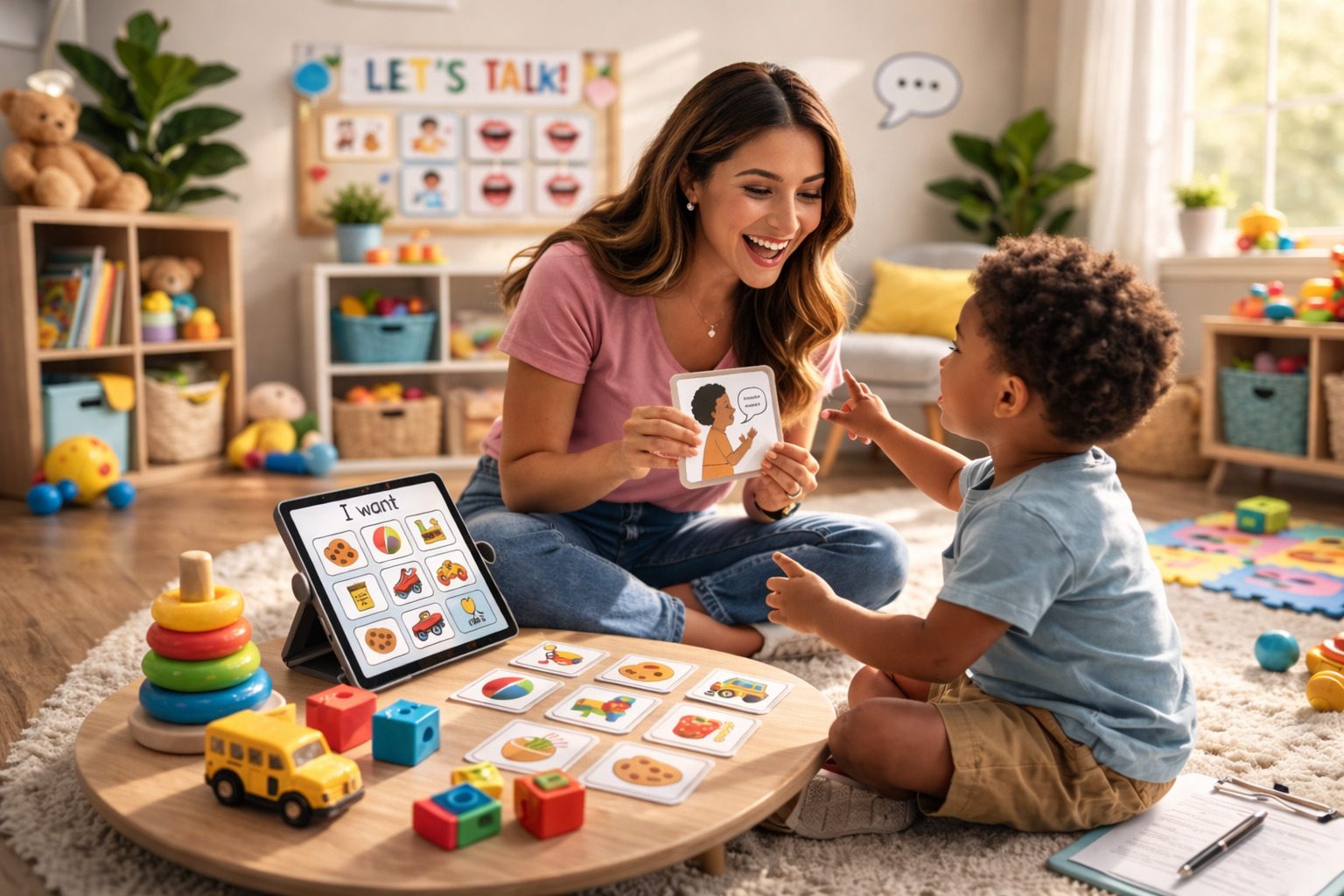
A speech-language pathologist supporting communication development for autistic children through individualized therapy.
Communication Is a Medical and Developmental System — Not Just a Behavior
Communication is often misunderstood as simply “talking more” or “reducing problem behaviors.” In reality, communication is a complex developmental system that includes multiple interrelated skills, such as:
• Receptive language (understanding words and directions)
• Expressive language (spoken words, gestures, and AAC)
• Social communication and pragmatics
• Speech sound development
• Motor planning for speech
• Symbolic and representational play
• Joint attention and shared engagement
These systems develop through neurological, cognitive, linguistic, and social processes over time. When a child experiences difficulty in any of these areas, the result may appear on the surface as delayed speech, limited interaction, or frustration during communication.
Speech-language pathologists spend years in graduate-level training studying language development, speech disorders, communication science, and neurodevelopment, followed by supervised clinical practice and national licensure requirements.
Communication disorders are not simply behaviors to shape. They are clinical conditions that require specialized evaluation and treatment from professionals trained in communication development.
Behavior Analysts and Communication Specialists Have Different Training
Board Certified Behavior Analysts (BCBAs) are trained in behavior analysis and behavior modification strategies. Their expertise focuses on understanding how behavior is influenced by environmental factors and how structured interventions can support learning.
While some behavior analysts may include communication goals within treatment programs, their professional training does not include the same depth of coursework required to diagnose and treat communication disorders.
Areas such as:
• language acquisition and developmental linguistics
• phonological and speech sound development
• motor speech disorders (such as apraxia)
• pragmatic and social communication development
• feeding and swallowing disorders
• augmentative and alternative communication (AAC)
are core areas of expertise for licensed speech-language pathologists.
Speech-language pathologists complete graduate-level education specifically focused on communication development and disorders, along with supervised clinical training and national licensure requirements.
When a child presents with significant communication delays, treatment should ideally be guided by a professional whose training is centered on communication science and language development.
Not All Providers Deliver the Same Level of Expertise
Another important factor families may not realize is that speech therapy providers can have different levels of training and credentials.
Speech therapy services should ideally be delivered by a licensed speech-language pathologist (SLP) who has completed extensive clinical training and holds:
• a master’s degree in speech-language pathology
• national certification through the American Speech-Language-Hearing Association (CCC-SLP)
• state licensure to practice as a speech-language pathologist
In some clinics, however, therapy sessions may be provided by speech-language pathology assistants (SLP-As). SLP-As can play a helpful role in supporting therapy under the supervision of a licensed SLP. However, their scope of practice is different.
SLP-As do not have the graduate-level education or clinical training required to independently evaluate, diagnose, or design treatment plans for communication disorders. Those responsibilities remain the role of a licensed speech-language pathologist.
For children with complex communication needs, especially young autistic children, direct treatment from an experienced SLP can be especially important in ensuring that therapy targets the underlying communication system rather than only surface-level behaviors.
The Risk of Over-Reliance on One Approach
When children receive very high hours of a single intervention model, other important areas of development may receive less attention.
Many autistic children benefit from support in foundational developmental skills such as:
• early symbolic and pretend play
• joint attention and shared engagement
• language comprehension
• motor planning for speech
• sensory regulation
• social interaction and connection
These abilities form the foundation of communication development and do not always emerge through behavior programming alone.
For many children, the most effective support comes from a balanced, developmental approach that includes speech-language therapy, play-based interaction, and caregiver coaching.
When communication intervention focuses on how language actually develops in the brain and in relationships, children are better supported in building meaningful, flexible communication skills that carry into everyday life.
Parents Deserve Complete Information
Families navigating an autism diagnosis deserve clear, transparent information about the full range of intervention options available to their child.
Applied Behavior Analysis (ABA) may be one component of a child’s support system. However, it should not automatically replace or overshadow specialized communication therapy when communication delays are present.
If a child is experiencing challenges with language development, speech clarity, or social communication, one of the most important early steps is a comprehensive evaluation by a licensed speech-language pathologist.
A thorough speech and language evaluation helps identify how a child understands language, expresses ideas, engages socially, and develops the building blocks needed for meaningful communication.
Communication is a core developmental system that impacts learning, relationships, and emotional regulation. It is too important to leave to chance.
The Bottom Line
Every child with autism is different.
What supports one child’s development may not be the right fit for another. Effective intervention should always be guided by a child’s individual developmental profile, rather than relying on a single model applied to every child.
When the primary concern involves speech, language, or social communication, the most qualified professional to guide that process is a licensed speech-language pathologist.
Speech-language pathologists are specifically trained to evaluate how communication develops, identify underlying language differences, and design interventions that support meaningful, functional communication.
Communication is one of the most important foundations for learning, relationships, and independence, it deserves specialized clinical expertise and individualized care.
FREQUENTLY ASKED QUESTIONS: Autism, ABA, and Speech Therapy
Should autistic children receive speech therapy?
Many autistic children benefit from working with a speech-language pathologist (SLP) because communication differences are a central feature of autism. Speech therapy can support language development, social communication, speech clarity, and the use of alternative communication systems when needed.
Can ABA replace speech therapy?
ABA and speech therapy address different areas of development. ABA focuses on behavior and learning strategies, while speech-language pathologists specialize in communication development and language disorders. For many children, speech therapy is an important part of a comprehensive support plan.
What does a speech-language pathologist do for autistic children?
Speech-language pathologists evaluate and treat areas such as:
language comprehension
expressive language development
social communication
speech sound development
motor planning for speech
augmentative and alternative communication (AAC)
Therapy often uses play-based interaction and caregiver coaching to help children develop meaningful communication skills.
When should my autistic child see a speech therapist?
If a child shows differences in speech, language development, or social communication, a comprehensive speech and language evaluation can help determine the best next steps. Early support can play an important role in helping children build communication skills that support learning and relationships.
Supporting Communication Development in Leander and Cedar Park
If you are a parent in Leander, Cedar Park, or surrounding communities and have concerns about your child’s speech, language, or social communication development, seeking guidance from a qualified professional can be an important first step.
Speechie Auntie, PLLC provides in-home speech therapy and communication evaluations for young children, including those with autism or developmental communication differences. Services focus on helping children build meaningful communication through play-based therapy, developmental strategies, and caregiver coaching.
Every child deserves an approach that respects their individual developmental profile and supports communication in ways that feel natural and effective.
If you would like to learn more about speech therapy services in Leander or Cedar Park, or schedule a consultation to discuss your child’s communication development, you can reach out to learn about current availability and next steps.
Written by Sonia Chowdhury Lopez, M.S., CCC-SLP
Owner and Speech-Language Pathologist at Speechie Auntie
