

Potty Training Isn’t “Just Behavioral” It’s Developmental
THE Speechie Auntie Perspective on Why Some Children StrugglePotty training is one of the most talked-about milestones in early childhood…
…and one of the most stressful for families when it doesn’t go smoothly.
If you’re here because your child is:
Refusing to sit on the potty
Having frequent accidents
Withholding urine or stool
Crying, hiding, or running away
Making little progress despite trying “all the methods”
I want you to take a deep breath first.
Your child is not being difficult.
You’re not doing anything wrong.
From a developmental lens, potty training is so much more than teaching a child where to go.
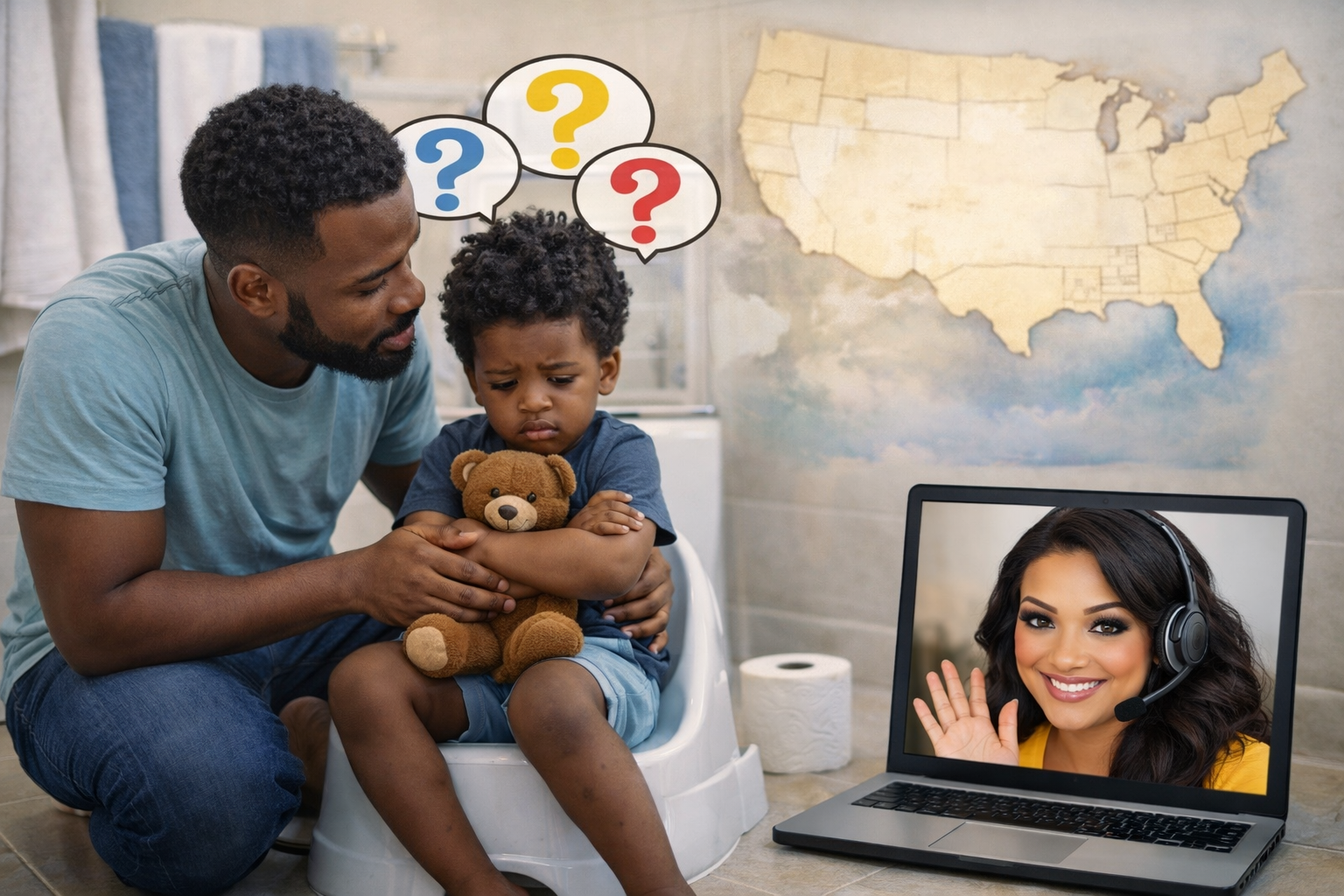
Virtual potty training coaching helps families create supportive, individualized toilet learning plans no matter where they live.
Potty Training Requires More Than Readiness —It Requires Integration
Successful potty learning requires multiple systems working together at once:
Body awareness (feeling the urge)
Motor planning (getting there, clothing management)
Sensory regulation (tolerating the bathroom environment)
Emotional safety
Routine predictability
This is why potty training often looks different for:
Autistic children
Children with sensory processing differences
Children with developmental delays
It’s not that they can’t learn.
It’s that they may need a different pathway to get there.
Speech & Communication Play a Bigger Role Than People Realize
As a speech-language pathologist, I look at potty training through a communication lens.
Before a child can successfully toilet train, they often need to:
Understand body-related vocabulary
Answer simple yes/no questions
Follow routine-based directives
Express discomfort
Request help
Tolerate transitions
When communication is hard, potty training can feel overwhelming not just physically, but emotionally too.
Common Signs a Child Needs a Different Potty Training Approach
I often support families whose children:
Seem afraid of the potty
Only go in pull-ups
Withhold until nighttime
Hide to stool
Struggle with sitting tolerance
Become dysregulated in the bathroom
Resist routine changes
These are regulation and developmental clues not behavior problems.
When we shift the lens, we shift the outcome.
The Pressure Trap (And Why It Backfires)
One of the biggest patterns I see?
Pressure → Withholding → Constipation → Fear → More Resistance
It becomes a cycle that families feel stuck in.
This is why fast-track potty methods don’t work for every child, especially those with developmental or sensory differences.
Potty learning should feel safe, predictable, and supported…
Not forced.
A Supportive, Developmental Approach to Potty Learning
When I work with families, we focus on:
Building body awareness first
Supporting regulation before transitions
Creating predictable potty routines
Using visual + language supports
Reducing fear around the bathroom space
Empowering communication
Potty training isn’t just about compliance.
It’s about confidence, for both the child and the parent.
When to Seek Potty Training Support
You don’t have to wait until things feel extreme.
Parent coaching can help if:
Your child is over age 3 and not progressing
Daycare or school deadlines are approaching
You feel stuck or overwhelmed
Your child is withholding
There are frequent accidents past expected age
Potty struggles are affecting daily life
Early support often prevents bigger stress later.
Virtual Potty Training Parent Coaching — Nationwide
Through Speechie Auntie parent coaching, I support families across the U.S. virtually.
Together we:
Identify what’s making potty training hard
Build an individualized learning plan
Reduce power struggles
Support communication around toileting
Create realistic routines
Give you step-by-step guidance
You’re not handed a generic method.
You’re given a plan that fits your child.
Final Thoughts from Speechie Auntie
Potty training is not a race.
It’s not a comparison milestone.
It’s not solved through pressure.
When we support the whole child, communication, regulation, sensory needs, and emotional safety, potty learning becomes more achievable and far less stressful.
If you’re feeling stuck, I’m here to help.
Frequently Asked Questions About Potty Training
What age should a child be potty trained?
Most children begin showing readiness signs between ages 2–3, but developmental readiness matters more than age. Children with speech delays, Autism, or sensory differences may require a longer timeline and individualized approach.
Why is my toddler refusing to use the potty?
Potty refusal can stem from fear, sensory sensitivities, communication challenges, or lack of body awareness. It’s rarely just behavioral. Understanding the root cause helps guide a more supportive training plan.
Is potty training harder for children with speech delays?
It can be. Children with limited expressive or receptive language may struggle to communicate urges, understand routines, or request help, all of which are key components of successful toilet learning.
How do I potty train a child with Autism?
Autistic children often benefit from visual supports, predictable routines, sensory accommodations, and gradual exposure. A one-size-fits-all potty method is usually not effective.
When should I worry about potty training delays?
Consider seeking support if your child is over age 3, withholding frequently, showing intense fear, or making little progress despite consistency.
Can potty training be done through virtual parent coaching?
Yes. Virtual potty training coaching allows professionals to observe routines, provide strategies, create plans, and guide parents step-by-step — all from home, anywhere in the U.S.
What if my child only poops in a pull-up?
This is very common and often related to sensory comfort, fear, or routine association. A gradual transition plan is usually more effective than immediate removal.
Do boys potty train later than girls?
Research shows boys may train slightly later on average, but developmental readiness and temperament play a bigger role than gender alone.
Ready for Potty Training Support That Actually Fits Your Child?
If you’re feeling stuck, overwhelmed, or unsure where to start, I offer virtual parent coaching nationwide.
Together we’ll create a realistic, supportive potty learning plan that works in your real life.
Written by Sonia Chowdhury Lopez, M.S., CCC-SLP
Owner and Speech-Language Pathologist at Speechie Auntie
