

SCREEN TIME & LANGUAGE DEVELOPMENT: WHAT PARENTS NEED TO KNOW BEFORE HANDING OVER A DEVICE
Many families wonder whether screen time can cause speech delay, especially during the toddler years when language development is rapidly growing.
In today’s digital age, screens are everywhere—phones, tablets, TVs, and more. Screens can be a convenient way to entertain or distract your child, especially during busy or stressful moments. As parents of toddlers and preschoolers, you may be asking yourself: "Is screen time affecting my child’s language development?" It’s a valid question, and one many parents are asking.
In this post, we'll break down what the research says, how screen time can impact speech and language development, and what you can do to make screen time healthier and more meaningful.
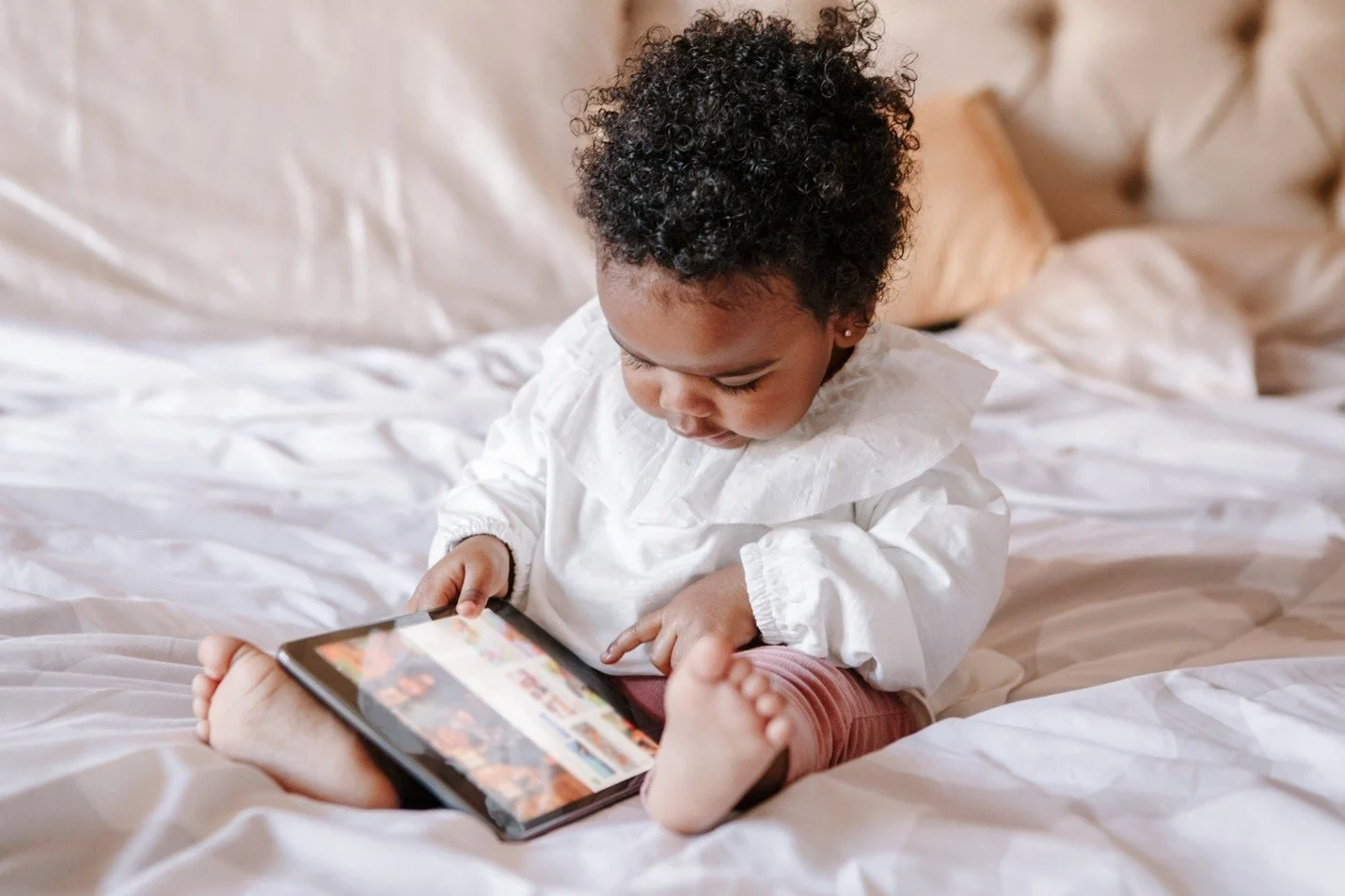
Screen time can impact how toddlers learn language, especially when it replaces real interaction.
How Screen Time Impacts Language Development
THE GROWING PRESENCE OF SCREENS IN EARLY CHILDHOOD
It’s no secret that children today are surrounded by technology from the moment they’re born. Research shows that many toddlers spend more than two hours daily on screens, often before they’ve mastered full sentences. While some shows and apps claim to be “educational,” not all screen time is beneficial, and the amount of time spent on a screen really does matter.
Can Screen Time Cause Speech Delay?
Many parents ask whether excessive screen time and speech delay are directly connected.
THE CRITICAL PERIOD FOR BUILDING SPEECH AND LANGUAGE SKILLS
The first five years of a child’s life are a vital period for speech and language development. During these first few years, the brain is most prepared to absorb and process language. During this window, typically from birth to around age 5, children’s brains are rapidly forming neural connections needed for understanding and producing language. In fact, by age 3, a child’s brain is already 80% developed, and by age 5, that number increases to 90%. This means the quantity and quality of early interactions are especially powerful.
This doesn’t mean language learning ends after age 5, but it does mean that the foundational skills for communication such as vocabulary, grammar, speech sounds, and social language skills are most easily formed during this time. Children who are spoken to on a regular basis, who are read to, and who are engaged in meaningful conversation are more likely to develop strong language skills that support future learning, literacy, and social development.
Missed opportunities during this critical period such as limited verbal interaction or excessive passive screen time can lead to delays in speech and language development. Many parents begin wondering whether their child’s communication is on track or if they’re noticing early signs of toddler speech delay.These delays don’t just affect a child’s ability to speak clearly or understand words; they can have a ripple effect across multiple areas of development. As these challenges build, they can impact school readiness, behavior, and self-esteem later on.
That’s why consistent, responsive, face-to-face interaction is absolutely essential during the early years of a child’s development. It’s not just about talking, it’s about connecting. Every time you engage in conversation with your child, whether you’re naming objects, reading a book together, or responding to their babbling or gestures, you’re doing something powerful: you’re wiring their brain for language. No show or app, no matter how “educational,” can replace the benefits of human interaction.
In summary, you are your child’s first and most important teacher. Every interaction, no matter how small, helps shape the way your child understands and uses language for the rest of their life.
HOW TO TURN SCREEN TIME INTO A LANGUAGE LEARNING TOOL
We get it, screens are a huge part of modern day. The good news is screen time can be beneficial if used wisely. Here’s how to make it work:
1. Co-View Whenever Possible: Sit with your child, talk about what you see, ask questions, and repeat new words.
2. Choose Interactive or Language Rich Content: Look for shows or apps that encourage participation, use simple language, and model vocabulary relevant to your child for everyday routines.
3. Set Boundaries and Stick to Them: Set timers whenever necessary and avoid using screens during meals, car rides, or bedtime.
4. Model Healthy Use: Children learn by example. Set screen boundaries for yourself and make space for conversation.
How Much Screen Time Is Appropriate for Toddlers?
SCREEN TIME RECOMMENDATIONS BY AGE
The American Academy of Pediatrics (AAP) recommends:
Under 18 Months: Avoid screen time entirely, except for video chatting (i.e., FaceTime with Family).
18 to 24 Months: Choose high-quality programming only and watch together so that you can help your child understand and learn from what they see.
2 to 5 Years: Limit screen time to 1 hour per day of high-quality programming, and co-view with your child to help them apply what they see to the real world.
THE BOTTOM LINE
Research shows toddlers learn language best through live interaction, not passive screen exposure. Screens can be useful tools, but they should never replace the power of human connection. When it comes to speech and language development, you are your child’s best “app.” Talking, playing, reading, and listening are the building blocks of communication and no screen can replicate that. So before handing over the tablet, take a moment to ask yourself “Is this helping my child to learn, connect, express, and grow or is it just filling time?” Remember, passive screen time (when a child is watching alone without interaction) provides much less benefit and may even be harmful in large amounts. Screen overuse is just one environmental factor, similar to prolonged pacifier or bottle use, that can influence communication development.
Healthier Alternatives to Screen Time for Language Growth
Children learn language best through real-life interaction. Activities like reading together, pretend play, singing songs, and narrating daily routines create far more opportunities for communication than passive screen viewing.
Signs Screen Time May Be Affecting Your Child’s Speech
If you’re concerned that screen time may be affecting your child’s communication, watch for red flags such as limited eye contact or response to their name, not using gestures such as pointing or waving, not using words by 18 months, or consistently preferring screens over social interaction or play. Don’t wait and reach out to a licensed Speech-Language Pathologist for a consultation. Early support can make a huge difference.
This is where strategies like parent coaching in speech therapy can be especially powerful, helping families build language during everyday routines. Families in Leander, Cedar Park, and North Austin often reach out when they notice speech delays related to screen overuse. Early support can make a significant difference in communication outcomes.
FAQ: Screen Time & Speech Development
Does screen time cause speech delay?
Excessive screen time can reduce opportunities for interaction, which is critical for language development.
How much screen time is okay for toddlers?
The AAP recommends limiting screen time and prioritizing interactive play and caregiver engagement.
Is educational TV better for speech development?
Educational programs are more beneficial when watched with a caregiver who talks and interacts with the child.
If you’re concerned about your child’s communication, you can learn more about in-home speech therapy services here.
Written by Sonia Chowdhury Lopez, MS, CCC-SLP
Owner and Speech-Language Pathologist at Speechie Auntie
