

What Happens After Early Intervention Ends at Age 3? A Guide for Williamson & Travis County Families
When your child receives Early Intervention services, support often becomes part of your family’s routine, therapy visits, progress updates, and a team helping your child grow.
So when you hear the words:
“Services will end at age 3.”
It can feel overwhelming.
Families across Williamson County and Travis County often ask:
Will my child lose services?
What happens next?
Do we qualify for school support?
Should we start private therapy?
If you’re approaching your child’s third birthday, here’s what to expect and how to plan your next steps with confidence.
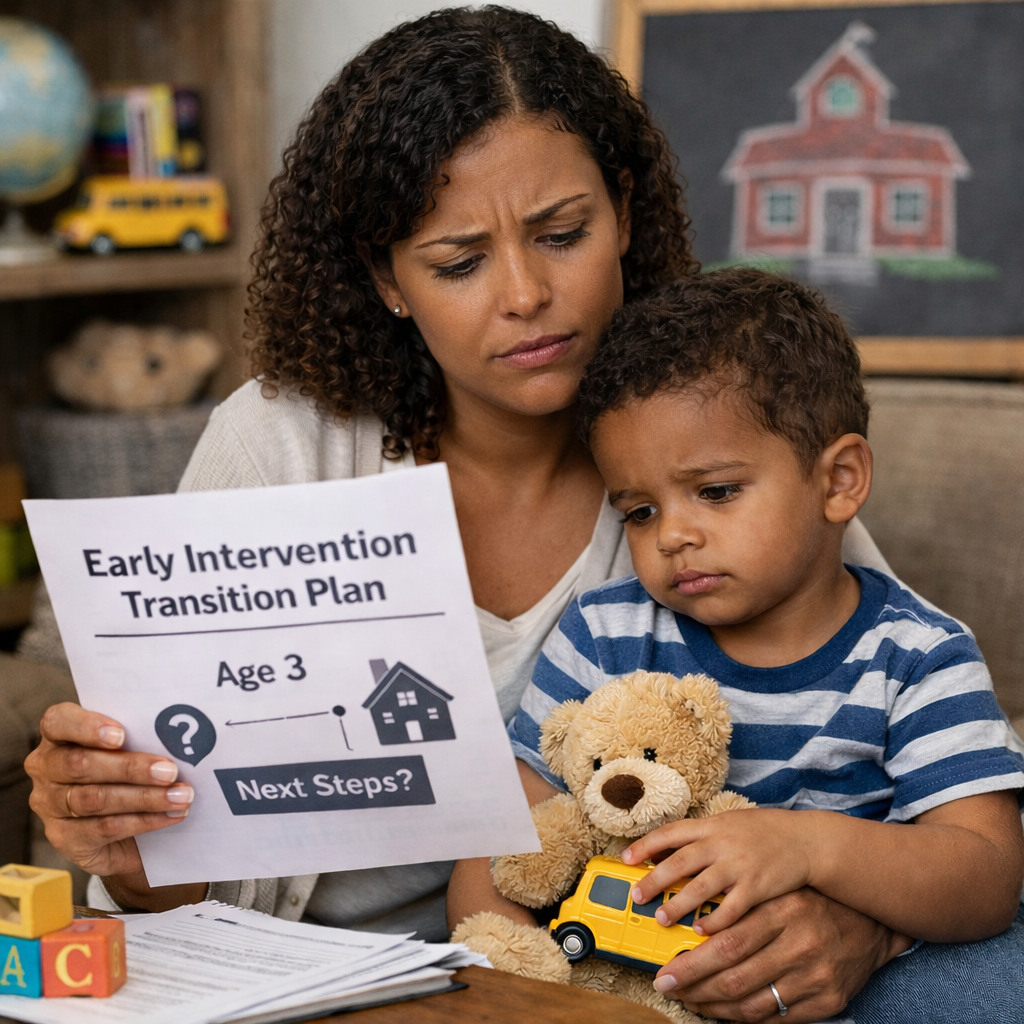
When Early Intervention ends at age 3, many families feel unsure about next steps. Transition planning helps children continue receiving the support they need.
Understanding Early Intervention in Texas
In Texas, Early Intervention services are provided through the state’s early childhood program:
Texas Early Childhood Intervention
Often called ECI, this program supports children from birth to age three who have developmental delays or disabilities.
Services may include:
Speech therapy
Occupational therapy
Physical therapy
Developmental support
Family education
ECI uses an IFSP (Individualized Family Service Plan) focused on helping your child communicate, learn, and participate in daily routines.
ECI is legally designed to end at age three regardless of progress level.
Why Services End at Age 3
This transition isn’t because your child no longer needs help.
It happens because responsibility shifts from early childhood programs to the public school system under federal special education law (IDEA Part B).
At age three:
ECI services stop
School districts take over evaluations and services
Plans move from IFSP → IEP (Individualized Education Program)
This process is called the Early Childhood Transition.
What Happens Before Your Child Turns 3
Around 6–9 months before your child’s third birthday, your ECI team should begin transition planning.
This includes:
A transition meeting
Discussion of next placement options
Referral to your local school district
Planning evaluations if appropriate
Families in our area are typically referred to:
Leander Independent School District
or their home district within Williamson or Travis County.
This referral process is known as Child Find.
What Is Child Find?
Child Find is the school district’s legal obligation to identify children ages 3–21 who may need special education services.
Through Child Find, your district may:
Conduct speech & language evaluations
Assess cognitive and developmental skills
Observe your child in structured settings
Determine eligibility for school-based services
This evaluation determines whether your child qualifies for an IEP at age three.
What If My Child Qualifies?
If eligible, services may include:
Speech therapy
Specialized preschool classrooms
Social skills support
Developmental instruction
When children transition out of Early Childhood Intervention (ECI) at age 3, families are often unsure how services will change. The table below breaks down the key differences between Early Intervention, school-based speech therapy, and private speech therapy.
| Early Intervention (ECI) | School-Based Services (Age 3+) | Private Speech Therapy |
|---|---|---|
| Home or daycare-based services | School campus-based services | Home, clinic, or daycare-based services |
| Family coaching model | Educational model | Family-centered + therapeutic model |
| Routine-based goals | Academic readiness goals | Functional communication + individualized goals |
| Flexible service frequency | Limited minutes per week | Flexible frequency based on child need |
| Focus on caregiver carryover | Focus on classroom success | Focus on whole-child communication |
| Birth to age 3 eligibility | Age 3 through school eligibility | No age or eligibility restrictions |
This shift to school-based services can feel significant for families used to in-home support. However, private practice in-home speech therapy can closely mirror the Early Intervention model, offering therapy within the child’s natural environment and emphasizing caregiver involvement.
What If My Child Does NOT Qualify?
This is one of the most stressful outcomes for parents and it happens more often than expected.
A child may:
Still have delays
Still struggle to communicate
Still need therapy
…but not meet strict school eligibility criteria.
When this happens, families often pursue:
Clinic-based services
Supplemental support alongside preschool
This is where continuing early support is critical.
Should I Wait or Start Private Therapy?
Short answer: Don’t wait if concerns remain.
Research and clinical experience show that maintaining therapy momentum leads to:
Faster language growth
Reduced behavior frustration
Stronger school readiness
Better long-term outcomes
The transition gap between ECI ending and school starting can be months long, especially for children with spring or summer birthdays.
Private therapy bridges that gap.
How In-Home Speech Therapy Supports the Transition
Many families in Leander, Cedar Park, and North Austin choose in-home therapy after ECI ends because it:
Continues familiar routines
Reduces transition stress
Allows parent coaching
Supports daycare/preschool carryover
Targets functional communication
This model mirrors what families valued most about ECI — real-life integration.
Signs Your Child May Need Continued Support After ECI
Consider ongoing speech therapy if your child:
Uses limited words or phrases
Struggles to follow directions
Becomes frustrated when communicating
Has difficulty with peers
Is hard to understand
Shows social communication delays
Even children making progress may benefit from continued services.
Frequently Asked Questions
Does my child automatically lose therapy at age 3?
Yes. ECI services end at age three regardless of progress. Continued therapy depends on school eligibility or private services.
Can my child receive both school and private speech therapy?
Absolutely. Many families use private therapy to supplement limited school minutes.
What if I disagree with the school evaluation?
You have the right to request an Independent Educational Evaluation (IEE) or seek private assessments.
When should I start planning for the transition?
Ideally 6–9 months before your child turns three.
Do you provide speech therapy after Early Intervention ends?
Yes. Speechie Auntie provides in-home, play-based speech therapy for toddlers and preschoolers throughout Williamson and Travis County, supporting communication, behavior, and school readiness after ECI services conclude.
Final Thoughts: You’re Not Losing SupporT, You’re Entering a New Phase
The end of Early Intervention can feel like a cliff.
It’s actually a bridge.
A bridge to:
School-based services
Private therapy
Expanded communication growth
Greater independence
With the right support plan, children continue making meaningful progress well beyond age three.
Navigating the transition after Early Intervention can feel overwhelming — but you don’t have to figure it out alone.
If your child is approaching age 3 or recently aged out of services, Speechie Auntie offers in-home speech therapy across Williamson and Travis County to help children continue building communication, confidence, and connection.
Schedule a consultation to discuss your child’s next steps and create a support plan that fits your family.
Written by Sonia Chowdhury Lopez, M.S., CCC-SLP
Owner and Speech-Language Pathologist at Speechie Auntie
